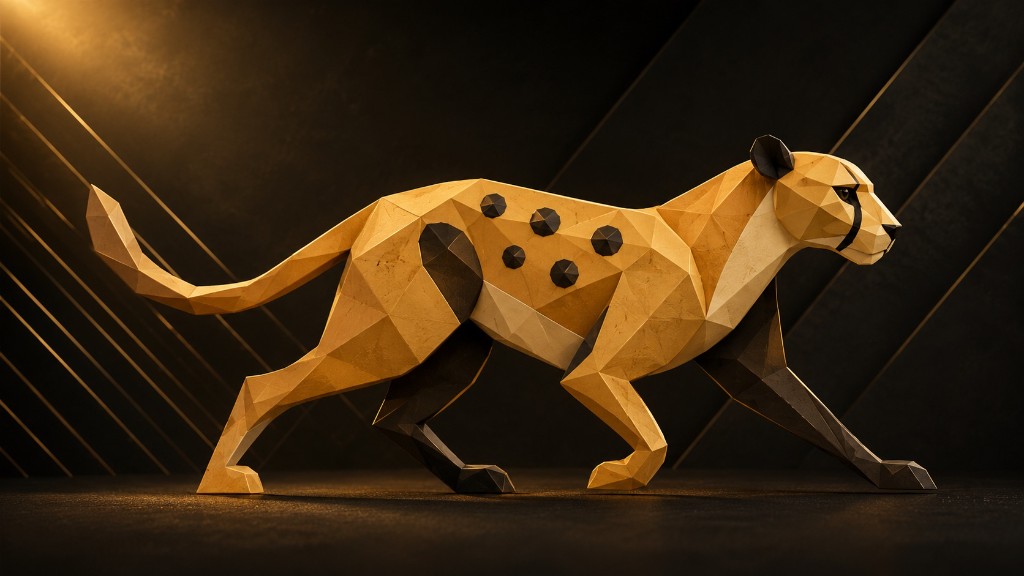
The T8 Cheetah
The profile that accelerates organizations
In every company, some profiles seem to operate at a different speed.
They quickly understand situations, detect opportunities before others, and adapt almost instantly when the environment changes.
In the T8 method, this behavior corresponds to the Cheetah.
The Cheetah is not necessarily the most structured or process-driven profile.
However, in fast-moving, competitive, or unpredictable environments, it often becomes a powerful accelerator of performance.
The T8 Method: understanding human behaviors
The T8 method is a behavioral analysis framework built around 8 major animal archetypes.
Each archetype represents a natural way of functioning in:
- decision-making,
- stress management,
- conflict handling,
- performance,
- change,
- team dynamics.
Important:
In the T8 method, the animal only represents behavior.
It does not describe:
- deep motivations,
- psychological drivers,
- communication styles.
These dimensions are analyzed separately within the method.
The Cheetah therefore describes a way of acting, deciding, and performing.
The behavior of the Cheetah
The Cheetah is a profile oriented toward:
- movement,
- adaptation,
- responsiveness,
- exploration,
- situational intelligence.
Its functioning is mainly based on:
- intellectual curiosity,
- adaptability,
- creativity,
- flexibility,
- improvisation.
Unlike other profiles that seek to stabilize or control their environment, the Cheetah primarily seeks to maintain mobility.
Its natural reflex:
understand fast, decide fast, move fast.
How to recognize a Cheetah at work
The Cheetah is often the person who:
- quickly finds alternative solutions,
- naturally adapts to unexpected situations,
- rapidly understands new topics,
- enjoys dynamic environments,
- gets bored with repetitive tasks,
- improvises easily under pressure.
In meetings, the Cheetah may:
- accelerate discussions,
- propose several ideas quickly,
- challenge existing approaches,
- make unexpected connections,
- easily shift perspective.
In organizations, the Cheetah often becomes:
- the problem solver,
- the innovator,
- the profile that quickly finds solutions in complex situations.
The Cheetah’s major strengths
High adaptability
The Cheetah performs particularly well in uncertainty.
Where some profiles need a stable framework before acting, the Cheetah can move forward even with incomplete information.
This behavior is especially effective in:
- startups,
- commercial environments,
- transformation contexts,
- rapid growth phases,
- crisis situations.
Rapid understanding
The Cheetah quickly understands dynamics.
It often detects before others:
- opportunities,
- contextual changes,
- emerging risks,
- hidden stakes.
This speed allows the Cheetah to make decisions quickly while others are still analyzing.
Operational creativity
The Cheetah is not creative in a purely theoretical way.
Its creativity is practical and action-oriented.
It enjoys:
- bypassing obstacles,
- finding efficient shortcuts,
- testing quickly,
- exploring multiple approaches,
- adapting strategy in real time.
This is often a highly effective profile in:
- business development,
- sales,
- marketing,
- consulting,
- strategy,
- innovation.
The Cheetah’s limitations
Like all behavioral profiles, the Cheetah also has areas of vulnerability.
The risk of dispersion
The Cheetah enjoys movement so much that it may:
- start too many projects,
- change direction too quickly,
- lose interest rapidly,
- lack follow-through in execution.
Its main risk:
confusing speed with real progress.
Difficulty with rigid environments
Highly procedural environments can quickly become exhausting for the Cheetah.
Too much:
- validation,
- hierarchy,
- control,
- process,
- repetition
… can create:
- frustration,
- demotivation,
- disengagement.
The Cheetah needs room to perform.
Impulsive decision-making
Its speed can sometimes become a trap.
The Cheetah may:
- decide too quickly,
- improvise where structure is needed,
- underestimate certain risks,
- change strategy prematurely.
In some organizations, this may create an image of instability, even though the Cheetah simply operates through continuous adaptation.
The Cheetah under pressure
Under stress, the Cheetah tends to:
- accelerate even more,
- multiply actions,
- frequently change priorities,
- avoid immobility,
- make rapid decisions to regain control.
The Cheetah particularly dislikes:
- slowness,
- rigid environments,
- endless discussions,
- highly political organizations.
How to manage a Cheetah
The Cheetah performs best when given:
- autonomy,
- challenges,
- variety,
- movement,
- freedom of execution.
Conversely, the Cheetah disengages when:
- everything becomes excessively controlled,
- every decision requires approval,
- the environment becomes bureaucratic.
The right balance generally consists of:
- setting a clear direction,
- while allowing freedom in how to achieve it.
Profiles that naturally work well with the Cheetah
The Lion
The Lion brings:
- direction,
- leadership,
- decision-making ability,
- impact vision.
The Cheetah brings:
- speed,
- adaptability,
- operational creativity.
This duo can become extremely powerful:
- the Lion sets the direction,
- the Cheetah quickly finds ways to move forward.
The Eagle
The Eagle thinks in terms of strategy and long-term vision.
The Cheetah brings field agility and execution speed.
This combination works particularly well in:
- competitive environments,
- innovation,
- high-evolution projects,
- company growth.
The Dolphin
The Dolphin brings relational fluidity that the Cheetah may sometimes neglect in its speed of action.
The Cheetah brings:
- movement,
- ideas,
- adaptability.
The Dolphin brings:
- cohesion,
- relational fluidity,
- collective stability.
This complementarity is often highly effective in commercial or entrepreneurial teams.
Natural tensions with the Cheetah
The Bee
The Bee values:
- methodology,
- stability,
- rigor,
- processes.
The Cheetah values:
- speed,
- improvisation,
- flexibility,
- adaptation.
Tensions generally appear when:
- the Bee sees the Cheetah as disorganized,
- the Cheetah sees the Bee as too slow or rigid.
Yet these profiles can become highly complementary when they understand their differences:
- the Cheetah opens possibilities,
- the Bee secures execution.
The Owl
The Owl seeks:
- precision,
- logic,
- risk control,
- rational validation.
The Cheetah generally prefers:
- moving quickly,
- testing directly,
- adjusting along the way.
The Owl may see the Cheetah as impulsive.
The Cheetah may see the Owl as excessively cautious.
This opposition becomes particularly visible in high-pressure environments.
Environments where the Cheetah excels
The Cheetah often performs exceptionally well in:
- startups,
- business development,
- complex sales,
- consulting,
- strategy,
- innovation,
- fast-changing environments.
Conversely, it may struggle more in:
- highly repetitive roles,
- ultra-procedural environments,
- rigid organizations,
- functions requiring constant methodical execution.
Key takeaways
The Cheetah is not a profile of stability.
It is a profile of movement.
Where some secure, it accelerates.
Where some execute, it explores.
Where some follow the framework, it looks for the most efficient path.
In an economic environment where adaptability is becoming a major competitive advantage, the Cheetah can become a true engine of transformation — provided it is understood, positioned correctly, and properly guided.
About the T8 Method
The T8 method was created by Tennessee Veldeman.
It distinguishes several complementary dimensions of human functioning:
- behavior,
- communication styles,
- psychological drivers,
- relational dynamics.
The goal is not to put individuals into boxes, but to better understand natural differences in functioning in order to improve:
- management,
- recruitment,
- communication,
- collective performance.
People Analyzer is currently the official distributor of the T8 method.